



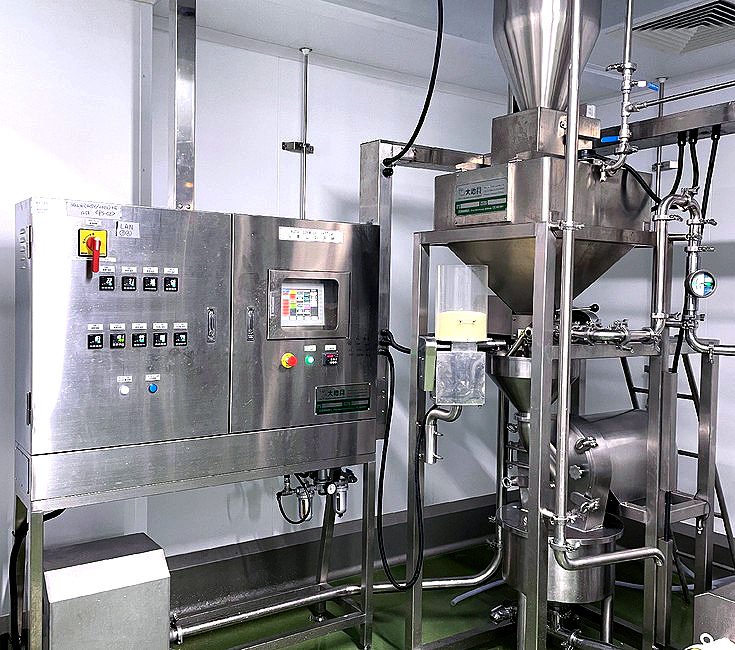
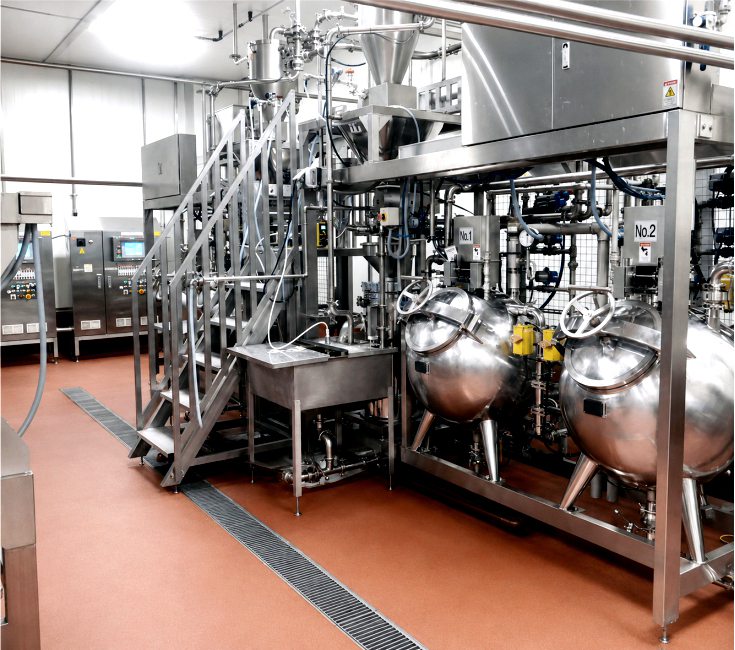
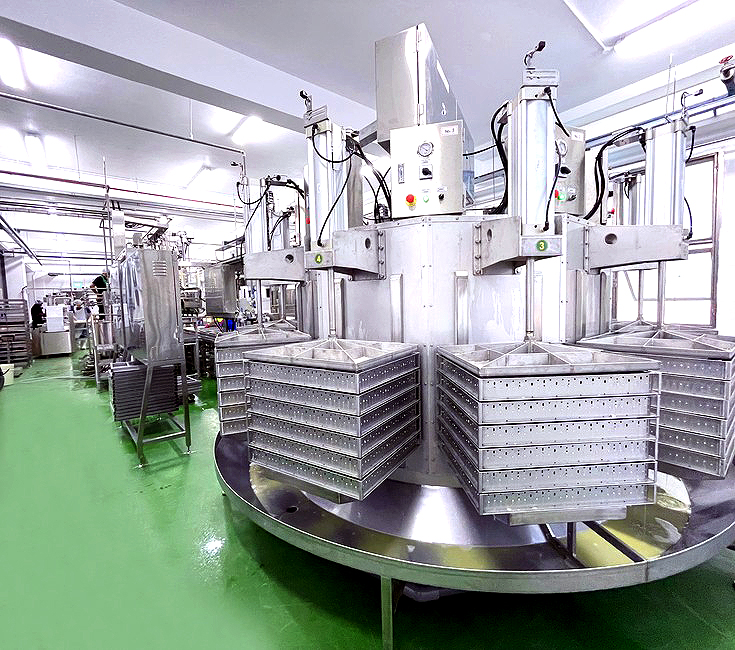
【Minimizing Tofu Damage & Elevating Yield: Automated Soybean Food Equipment】
In the realm of automated soybean food machinery and tofu production equipment, most food factories face a critical manufacturing pain point: as production capacity scales up, traditional cutting methods or manual handling frequently cause fracturing on the edges and corners of the tofu. This not only compromises the product's appearance but also generates excess waste, dragging down overall production efficiency.

[Three Core Advantages Driving High-Efficiency Automated Tofu Production]
To meet the market demand for high throughput and flawless product yields, TATI, a premier Taiwanese manufacturer of automated soy food equipment, has leveraged over half a century of Shokunin (artisan) expertise to develop the Underwater Tofu Cutting & Box-Feeding Machine (ACP Series). By harnessing the natural buoyancy of water combined with fluid dynamics, the system provides comprehensive support and cushioning. This ensures tofu retains its perfect shape during the cutting and box-feeding processes, drastically reducing damage rates and successfully optimizing both production capacity and quality yield up to 99.5%. The core process optimization of the Underwater Tofu Cutting & Box-Feeding Machine delivers three primary advantages:
● Underwater Cutting Technology:
A Fluid Dynamics Application That Slashes Edge Fractures and Waste Costs Featuring a pioneering underwater cutting technique, the machine utilizes water buoyancy to mitigate mechanical shear force, keeping the tofu perfectly intact. This minimizes damage and scrap, maximizes product yield, and significantly lowers raw material waste and manufacturing expenses.
● Patented Multi-Blade Synchronous Cutting:
A Multi-Track Automated System for Customized Specifications Equipped with proprietary multi-blade synchronous cutting technology and intelligent water-level controls, the system precisely calibrates product dimensions and weight. It seamlessly accommodates various product varieties—including silken tofu, firm tofu, and fried tofu—greatly enhancing product uniformity and brand quality.
● Fully Automated Cutting & Box Feeding:
Slashing Labor Dependencies While Elevating Food Safety Integrating the entire workflow of cutting, separating, and automatic box-feeding, the system can be seamlessly interconnected with downstream film-sealing, pasteurizing, and packaging equipment. Engineered for stable 24/7 operation, it substantially slashes labor costs and reduces human contact, fully aligning with rigorous GMP and HACCP food safety standards.
[Making Tofu Production Highly Efficient, Stable, and Exceptionally Competitive]
Since its founding in 1961, TATI has deeply committed itself to the fields of soybean food processing machinery and food automation whole plant design, successfully assisting numerous large-scale food manufacturers worldwide in implementing smart production equipment to boost capacity, trim expenses, and fortify quality. If you are looking to effectively eliminate tofu damage rates, please contact the TATI consultation hotline at 03-390-0862 or reach out via our official email at info@tati.com.tw. Our professional team is ready to provide tailored whole plant designs and equipment configurations to upgrade your capacity and quality concurrently.
Q1:How can food factories effectively reduce tofu cutting damage and optimize product yields?
A:Implementing automated underwater tofu cutting equipment is the absolute key to elevating yields. TATI’s ACP Series leverages natural water buoyancy and fluid dynamics to eliminate tofu cracking, boosting product yields up to 99.5%. Simultaneously, it consolidates cutting, separating, and automatic box-feeding workflows to minimize labor costs, while easily connecting with film-sealing, pasteurizing, and packaging equipment for a fully integrated automated production line.
Q2:What types of food factories are best suited for adopting automated tofu cutting and box-feeding machinery?
A:It is ideal for manufacturers of silken tofu, firm tofu, fried tofu, and boxed tofu with medium-to-large capacity requirements. It is especially beneficial for food plants grappling with rising labor costs, high product damage rates, capacity bottlenecks, or those needing to comply strictly with GMP and HACCP food safety regulations to optimize production efficiency.
Q3:What manufacturing bottlenecks can be resolved by transitioning to automated tofu equipment?
A:Transitioning to automated tofu machinery resolves issues such as edge fracturing during cutting, inconsistent product sizing, structural damage from manual handling, soaring payroll expenses, and food safety contamination risks. Furthermore, it accelerates production efficiency, reduces raw material waste, increases product uniformity, and empowers enterprises to establish food manufacturing workflows that align with intelligent manufacturing trends.


