


Knowledge


Edamame, Soybeans, and Black Beans Are Actually One Family?
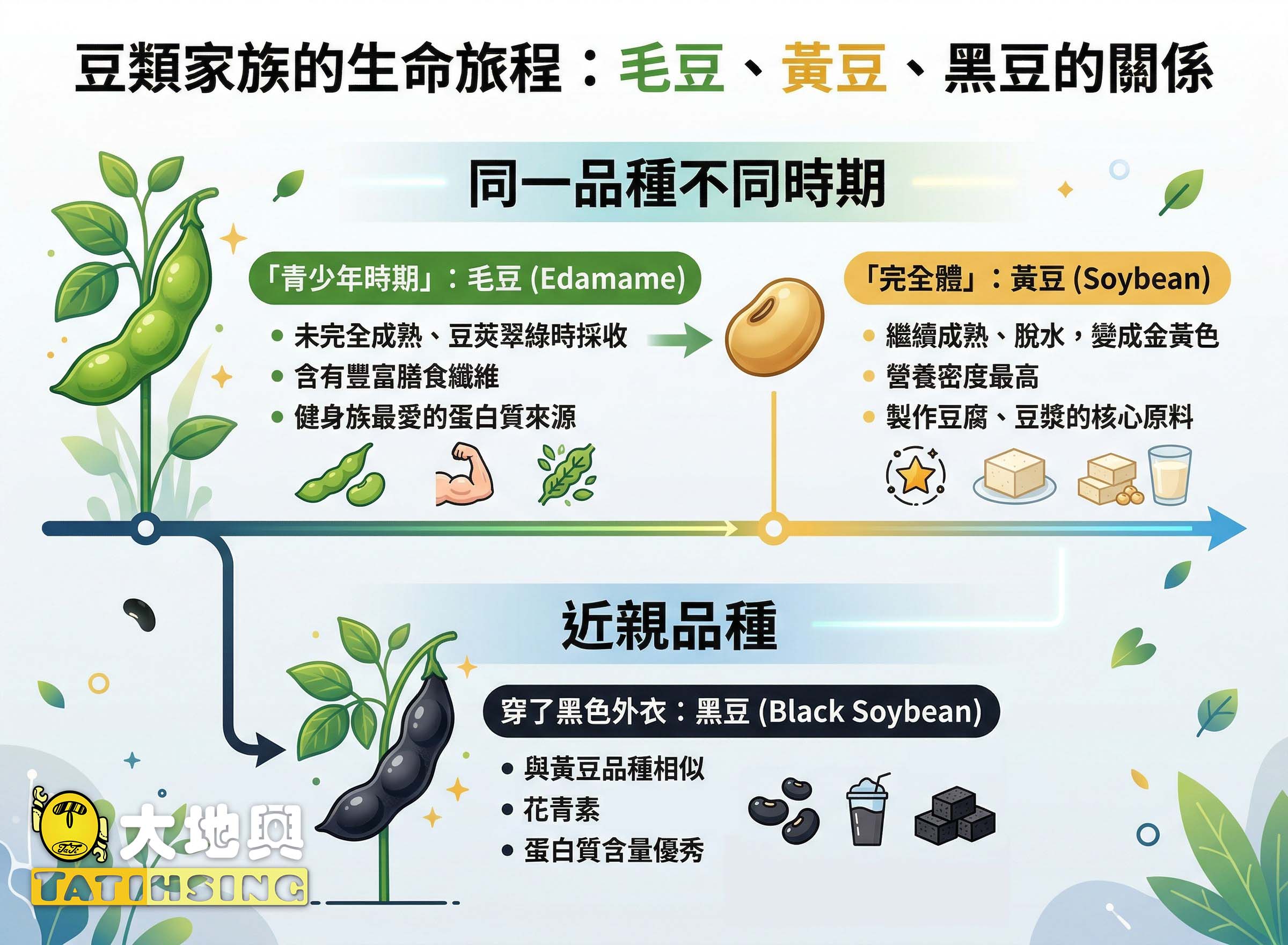
In today's era of rising health consciousness, you might not have realized that the edamame,
soybeans, and black beans commonly seen on your table are actually the same plant species in botanical terms—Glycine max.
These high-quality sources of plant protein showcase unique advantages in nutritional content and mouthfeel based on their harvest timing and seed coat color.
Edamame: The "Teenage Stage" of Soybeans
Edamame is not a special variety; it is actually just a soybean in its "youth!" When soybeans are harvested while still immature and the pods are still vibrant green,they become the edamame we frequently eat. Rich in dietary fiber, it is a favorite protein source for the fitness community.
Soybeans: The "Full-Grown" Mature Form
As edamame continues to mature on the plant and dehydrates, turning golden yellow, it becomes the familiar soybean.
At this stage,soybeans have the highest nutrient density and serve as the core raw material for making tofu and soymilk.
Black Beans: "Brothers" in a Black Coat
Black beans are "close relatives" of soybeans. The two varieties are similar, except that the seed coat of the black bean contains anthocyanins,resulting in its black color. Its protein content is equally outstanding.
From Harvest to Consumption, TATI Transforms with You
Whether you want to transform nutrient-packed soybeans into fragrant soymilk or silky tofu, this "transformation journey" requires a professional assistant.
TATI has been deeply rooted in food machinery for many years. From the most basic soaking and grinding to the final pressing and pasteurizing,our automated equipment acts like a precise artisan, helping you preserve the purest nutrients of the soybean while making the processing workflow simple and efficient!
Q1: Which has higher nutritional value, black soymilk or regular soymilk?
Actually, both are very rich in nutrients! Soybean milk contains high amounts of isoflavones, which are great for maintaining a healthy complexion.
Black soymilk features "anthocyanins" from the black bean skin,
which serves as an excellent antioxidant source for modern people who frequently use smartphones and computers.
Q2: Can edamame be made into soymilk?
The main reason is the difference in "texture" and "flavor." Edamame has more water and less fat,
so its aroma when blended is far inferior to that of mature soybeans. Furthermore, the protein-to-fat ratio of mature soybeans is ideal for emulsification.
When paired with TATI automated equipment, you can achieve that rich, mellow soymilk flavor that everyone loves.
Q3: Can black beans also be made into tofu?
Yes! Tofu made from black beans has a darker hue. Tofu made from yellow soybeans contains high-quality plant protein and soy isoflavones,making it the top choice for foundational nutrition.
Tofu made from black beans offers additional Vitamin E and anthocyanins, providing even better antioxidant properties.
TATI provides more than just equipment; we are committed to converting biological knowledge into production power, helping you create the most competitive soy products on the market.
Click here to consult a TATI professional advisor.
The Best Sources of Protein for Vegetarians, According to Experts-Soy Bean
